
Mercedes-Benz Tire Replacement Cost in Michigan: What Drivers Should Know
Mercedes-Benz tire replacement cost can vary considerably from one vehicle to another. A compact Mercedes-Benz SUV with a conventional tire size may have different replacement requirements than a Mercedes-AMG model, an electric vehicle, or a vehicle equipped with staggered wheels and performance tires.
The price of the tire itself is only one part of the total. Tire size, speed rating, load rating, seasonal design, run-flat construction, Mercedes Original specifications, installation, balancing, alignment needs, and the number of tires being replaced can all affect the final estimate.
For drivers in Grand Blanc, Flint, and throughout Genesee County, the best way to obtain an accurate quote is to identify the exact vehicle and tire specification before comparing options.

A professional tire inspection can help identify tread wear, damage, pressure concerns, and the correct replacement specifications.
How Much Does Mercedes-Benz Tire Replacement Cost?
There is no single replacement price that applies to every Mercedes-Benz. The total depends on the model, wheel size, tire specification, tire brand, installation requirements, and whether one, two, or four tires are being replaced.
A tire replacement estimate may include:
- The selected replacement tire or tires
- Mounting the tires onto the wheels
- Computerized wheel balancing
- New valve components when required
- Tire-pressure monitoring system service when needed
- Old-tire disposal charges
- Applicable taxes and shop charges
- A wheel alignment when recommended
- Wheel repair or replacement if damage is discovered
Some tire installations are straightforward. Others may involve low-profile tires, large-diameter wheels, staggered fitments, run-flat construction, or model-specific requirements that affect labor and equipment needs.
Why We Do Not List One Universal Tire Price
A price published without confirming the vehicle, tire size, load rating, speed rating, and construction could be misleading. An accurate estimate should be based on the exact Mercedes-Benz and the tires approved for that vehicle.
What Affects Mercedes-Benz Tire Replacement Cost?
Tire Size
Larger wheel diameters, wider tires, and lower-profile sidewalls can affect tire availability and replacement cost.
Vehicle Performance
A Mercedes-AMG model may require tires with different speed, load, construction, or performance specifications than a standard model.
Seasonal Design
Summer, all-season, all-weather, and winter tires are engineered for different temperatures and driving conditions.
Run-Flat Construction
Extended-mobility or run-flat tires use specialized construction that may affect the available options and installation process.
Quantity Replaced
The recommendation may involve one tire, a matched axle pair, or a complete set depending on wear, damage, drivetrain, and vehicle requirements.
Additional Service
Balancing, alignment, sensor service, valve components, and wheel repairs can affect the completed installation estimate.
How Do I Find My Mercedes-Benz Tire Size?
The tire size is printed on the tire sidewall. A size may appear in a format similar to:
235/55 R19 105H
Each part of that specification provides information about the tire width, sidewall profile, wheel diameter, load capacity, and speed rating. The replacement tire should meet the requirements established for the vehicle.
Tire information may also be found on the vehicle information label, inside the fuel filler area, in the operator’s manual, or through a Mercedes-Benz service professional.
Do not rely only on the wheel diameter. Two tires designed for a 19-inch wheel may have different widths, sidewall profiles, load ratings, speed ratings, and intended applications.
What Are Mercedes Original Tires?
Mercedes Original tires are developed, tested, and adapted for use with specific Mercedes-Benz vehicles. These tires may carry an identifying marking on the sidewall.
MO
MO identifies a Mercedes Original tire developed and tested for compatibility with applicable Mercedes-Benz models.
MO1
MO1 tires are developed for applicable Mercedes-AMG vehicles and matched to their suspension and performance characteristics.
MOE
Mercedes Original Extended tires use reinforced sidewalls to provide limited extended mobility after a loss of pressure. They must be used with a tire-pressure monitoring system.
MOS
Mercedes Original Silent tires use a specialized foam insert to help optimize tire-noise characteristics on certain vehicles.
The presence of an MO marking does not mean every MO tire fits every Mercedes-Benz. The full size, load rating, speed rating, construction, and vehicle application must still be confirmed.
Owners can review additional information through the official Mercedes Original Tires guide.
Do I Have to Buy Mercedes Original Tires?
The replacement tire must meet the specifications and requirements established for the vehicle. A Mercedes Original tire provides a clear indication that the tire was developed and tested for a particular Mercedes-Benz application.
Before selecting a different tire, review:
- Approved tire size
- Load index
- Speed rating
- Seasonal classification
- Run-flat or conventional construction
- Front and rear fitment requirements
- Vehicle-specific manufacturer guidance
Choosing a tire based only on its price or wheel diameter can result in a tire that does not match the vehicle’s performance, load, or dimensional requirements.
Do All Four Mercedes-Benz Tires Need to Be Replaced?
Not every tire concern automatically requires four new tires. The correct recommendation depends on the cause of replacement, the remaining tread on the other tires, the vehicle’s drivetrain, the front and rear tire sizes, and the tire specifications already installed.
Possible recommendations may include:
- Replacing one tire when a properly matched replacement is available and the remaining tires have compatible wear
- Replacing both tires on the same axle to maintain more consistent traction and handling
- Replacing all four tires when wear is substantial, the tires are aged, multiple tires are damaged, or drivetrain requirements make matching especially important
Tires on the same axle should be appropriately matched for size, brand, model, type, speed rating, and performance characteristics. A substantial difference in tread depth or rolling circumference may also affect how the vehicle responds.
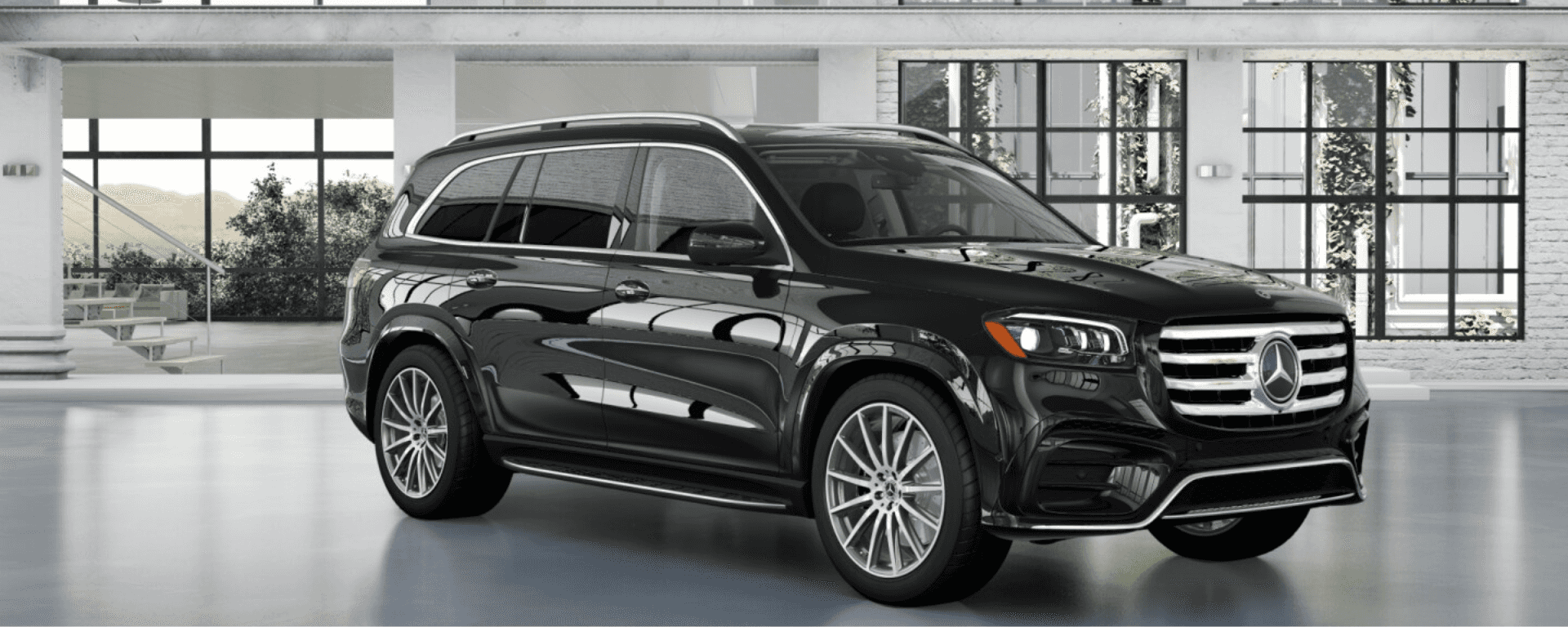
Tire matching can be especially important on a Mercedes-Benz equipped with 4MATIC® all-wheel drive.
Do 4MATIC® Vehicles Need Four New Tires?
A Mercedes-Benz with 4MATIC® may require closer attention to tire matching because the all-wheel-drive system distributes power through both axles.
Whether all four tires require replacement depends on:
- The difference in tread depth between the existing and replacement tires
- The rolling circumference of each tire
- Whether the tires are the same size, brand, model, and type
- Whether the vehicle has a staggered tire arrangement
- The requirements stated for the particular vehicle
A technician should measure the remaining tread and review the exact tire specifications before recommending one tire, an axle pair, or a complete set.
For more information about the drivetrain, read our guide to Mercedes-Benz 4MATIC® all-wheel drive.
What Is a Staggered Tire Setup?
Some Mercedes-Benz vehicles use different tire sizes on the front and rear axles. This is known as a staggered fitment.
For example, the rear tires may be wider than the front tires. The sizes are intentionally different, but the tires still need to meet the specifications established for each axle.
A staggered setup may also affect rotation options. Tires with different front and rear sizes generally cannot be rotated in the same way as four identically sized tires.
Before ordering replacements, check both the front and rear tire sidewalls. Do not assume all four tires are the same size.
Run-Flat Tires vs. Conventional Tires
Some Mercedes-Benz vehicles are equipped with extended-mobility tires, while others use conventional tires and may include a mobility kit, spare tire, or another roadside solution.
Run-Flat or Extended-Mobility Tires
A run-flat tire uses reinforced construction that may allow limited continued travel after pressure loss. Distance, speed, vehicle load, tire damage, and manufacturer restrictions still apply.
A run-flat tire should not be treated as permanently safe to drive after a puncture. Reduce speed, follow the vehicle warnings, and arrange inspection or replacement as soon as practical.
Conventional Tires
A conventional tire does not provide the same extended-mobility capability. Driving on a tire that has lost pressure can rapidly damage the tire and wheel and may cause loss of vehicle control.
Before switching from run-flat to conventional tires, discuss how the change may affect ride characteristics, roadside preparation, storage for a mobility kit or spare, and vehicle-specific recommendations.
When Should Mercedes-Benz Tires Be Replaced?
Tires should be inspected regularly rather than replaced only according to mileage. Two vehicles with the same mileage can have very different tire conditions because of driving style, road surfaces, climate, inflation, alignment, and storage.
Replacement may be recommended when a tire has:
- Insufficient tread depth
- Exposed tread-wear indicators
- A sidewall cut, bulge, bubble, or exposed cord
- A puncture that cannot be safely repaired
- Repeated pressure loss
- Dry cracking or age-related deterioration
- Uneven or irregular tread wear
- Impact damage from a pothole or road hazard
- Vibration associated with tire or internal structural damage
A tire can require replacement even when some tread remains. Sidewall damage, internal damage, age, and improper repairs may make continued use inappropriate.
Can a Mercedes-Benz Tire Be Repaired?
Some punctures may be repairable, but not every puncture can or should be repaired. The answer depends on the location, size, angle, previous repairs, remaining tread, internal condition, and tire construction.
Damage near the sidewall or shoulder is generally more concerning than a small puncture in an appropriate area of the tread. A tire should be removed from the wheel and inspected internally before a repair decision is made.
A plug inserted from the outside does not provide the same inspection opportunity as removing and evaluating the tire. Ask the service professional to explain whether the proposed repair follows the tire manufacturer’s requirements.
Is Wheel Balancing Included With Tire Replacement?
New tires should be balanced as part of a proper installation. Wheel balancing helps reduce vibration caused by an uneven distribution of weight around the tire-and-wheel assembly.
Balancing and alignment are different services:
Wheel Balancing
Balancing corrects weight differences within the rotating tire-and-wheel assembly. It is commonly performed when tires are installed.
Wheel Alignment
Alignment measures and adjusts wheel angles according to vehicle specifications. It may be recommended when wear is uneven or the vehicle pulls, wanders, or has an off-center steering wheel.
Installing new tires does not automatically correct an alignment problem. If the old tires developed unusual wear, the underlying cause should be addressed to help protect the new set.
Will Tire-Pressure Sensors Need to Be Replaced?
Tire-pressure monitoring sensors are not automatically replaced every time new tires are installed. Their condition, age, battery status, valve components, and vehicle design should be evaluated during service.
The tire-pressure monitoring system should be checked after installation. Some vehicles may require sensor identification, system initialization, or a short drive before current readings appear.
Use the tire-pressure recommendation specified for the vehicle and its load conditions. The maximum pressure printed on the tire sidewall is not the normal vehicle inflation recommendation.
How Does Michigan Weather Affect Tire Selection?
Michigan drivers may encounter hot summer pavement, heavy rain, freezing temperatures, snow, slush, and rapid seasonal changes. The tire category should match the temperatures and conditions in which the vehicle will be operated.
All-Season Tires
All-season tires are designed for a broad range of moderate conditions. Their winter capability varies by tire design, tread condition, and temperature.
Winter Tires
Winter tires use tread patterns and compounds intended for colder temperatures and winter conditions. They may provide improved cold-weather traction compared with tires not designed for those temperatures.
Summer Tires
Summer performance tires are designed for warm-weather grip and response. They may not be intended for snow, ice, or low temperatures.
Drivers should not assume that a tire labeled for one season will perform appropriately in every Michigan condition. Review the tire manufacturer’s limitations and plan seasonal changes before temperatures move outside the tire’s intended operating range.
How Can Tire Life Be Extended?
No maintenance practice can prevent normal wear, but several habits may help tires wear more evenly and make developing concerns easier to identify.
- Check tire pressure regularly when the tires are cold
- Use the vehicle-specific recommended pressure
- Inspect for damage after pothole or curb impacts
- Address pulling, vibration, and steering concerns promptly
- Rotate tires when permitted by the fitment and maintenance requirements
- Have alignment concerns evaluated
- Avoid exceeding the vehicle’s load limits
- Store seasonal tires correctly when they are not installed
Rotation may not be possible on vehicles with staggered tire sizes, directional tires, or other model-specific fitments. Confirm the proper service approach for the individual vehicle.
What Information Is Needed for a Tire Quote?
Providing accurate vehicle information helps the service or parts team identify compatible replacement options.
Be prepared to provide:
- The vehicle year
- The Mercedes-Benz model and trim
- The vehicle identification number
- The front and rear tire sizes
- The current tire brand and model
- Any MO, MO1, MOE, or MOS marking
- Whether one or more tires are damaged
- Approximate remaining tread on the other tires
- Any vibration, pulling, noise, or pressure-loss concern
The vehicle identification number can help identify original equipment, but the tires currently installed should still be inspected because wheels or tire sizes may have been changed after delivery.
Mercedes-Benz Tire Replacement Near Flint and Grand Blanc
Mercedes-Benz of Grand Blanc provides tire inspections, replacements, balancing, alignment evaluation, and related vehicle service for drivers throughout Grand Blanc, Flint, Fenton, Davison, Burton, Swartz Creek, Holly, Lapeer, and surrounding Michigan communities.
Our service team can inspect the tires, confirm the front and rear specifications, measure remaining tread, and review replacement choices for the particular Mercedes-Benz.
Visit our Mercedes-Benz service center to learn more about available maintenance and repair support. The dealership also offers online Mercedes-Benz service scheduling. :contentReference[oaicite:1]{index=1}
Request a Mercedes-Benz Tire Inspection
Schedule an appointment to have your tire size, tread condition, wear pattern, inflation, and replacement requirements reviewed by the Mercedes-Benz of Grand Blanc service team.
Frequently Asked Questions About Mercedes-Benz Tires
How much does it cost to replace Mercedes-Benz tires?
The cost varies according to tire size, model, speed and load rating, seasonal design, run-flat construction, quantity, installation, balancing, alignment needs, taxes, and other applicable charges. An exact quote requires the vehicle and tire specifications.
Do I need to replace all four tires on a Mercedes-Benz?
Not always. The recommendation depends on the remaining tread, tire specifications, drivetrain, damage, wear pattern, and vehicle requirements. Some situations require one tire, an axle pair, or a complete set.
Do I need four new tires on a 4MATIC® vehicle?
Possibly. Differences in tread depth, rolling circumference, tire type, and fitment may be important on a 4MATIC® vehicle. A technician should measure the existing tires before making a recommendation.
What does MO mean on a Mercedes-Benz tire?
MO identifies a Mercedes Original tire developed, tested, and adapted for applicable Mercedes-Benz vehicles. The complete tire size, load rating, speed rating, and vehicle application must still match.
What is an MOE tire?
MOE means Mercedes Original Extended. These tires use reinforced sidewalls to provide limited extended mobility after pressure loss and must be used with a tire-pressure monitoring system.
Can a punctured Mercedes-Benz tire be repaired?
Some punctures may be repairable depending on their location, size, angle, tire condition, construction, and repair history. The tire should be removed and inspected internally before a repair decision is made.
Should I get an alignment when replacing tires?
An alignment may be recommended when the old tires have uneven wear or the vehicle pulls, wanders, or has an off-center steering wheel. Tire replacement alone does not correct wheel-alignment concerns.
Where can I get Mercedes-Benz tire replacement near Flint?
Mercedes-Benz of Grand Blanc provides tire inspections and replacement support for drivers from Flint, Grand Blanc, and throughout Genesee County. Appointments can be requested through the dealership’s online service scheduler.
This article provides general tire information and does not replace the operator’s manual, tire manufacturer instructions, vehicle-specific requirements, or a professional inspection. Tire specifications, repair eligibility, replacement recommendations, pricing, availability, and service requirements vary by vehicle and tire. Confirm the correct tire and service recommendations with Mercedes-Benz of Grand Blanc before purchase or installation.
0 comment(s) so far on Mercedes-Benz Tire Replacement Cost in Michigan: What Drivers Should Know